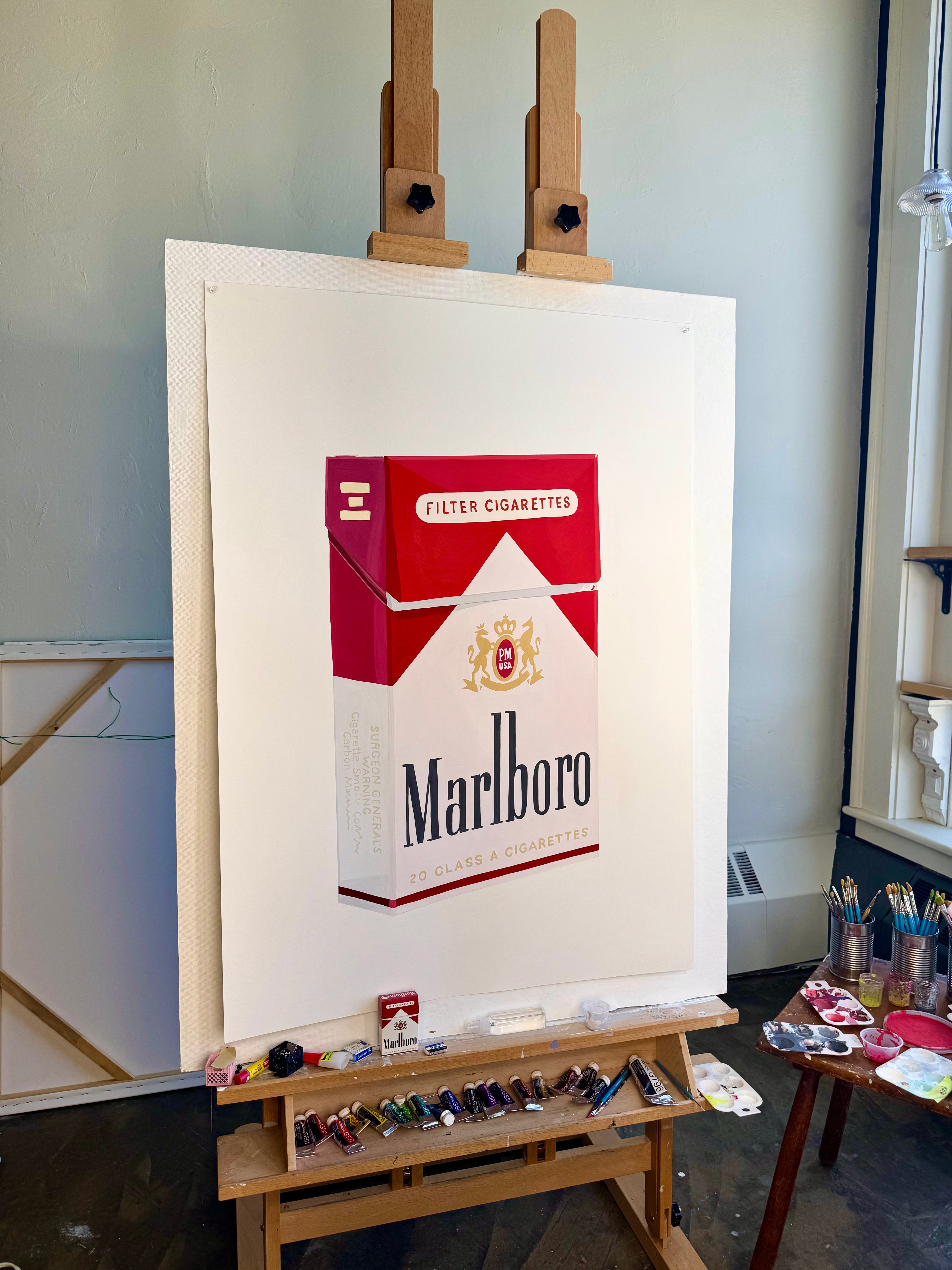
Smokers Die Younger
The sweet comfort of Marlboro branding

Somewhere on Rue Clark there’s an Algerian man smoking Marlboro Reds. Maybe he’s not Algerian. Maybe he just went to Algeria. Maybe he’s not a man but a woman, and maybe she’s young, having carried a carton of cigarettes across the ocean. I kept her empty pack of cigarettes on top of the mini fridge in my apartment. There was a bug smashed on the side of the pack that I didn’t bother to clean off, and this bug traveled back to America with me.
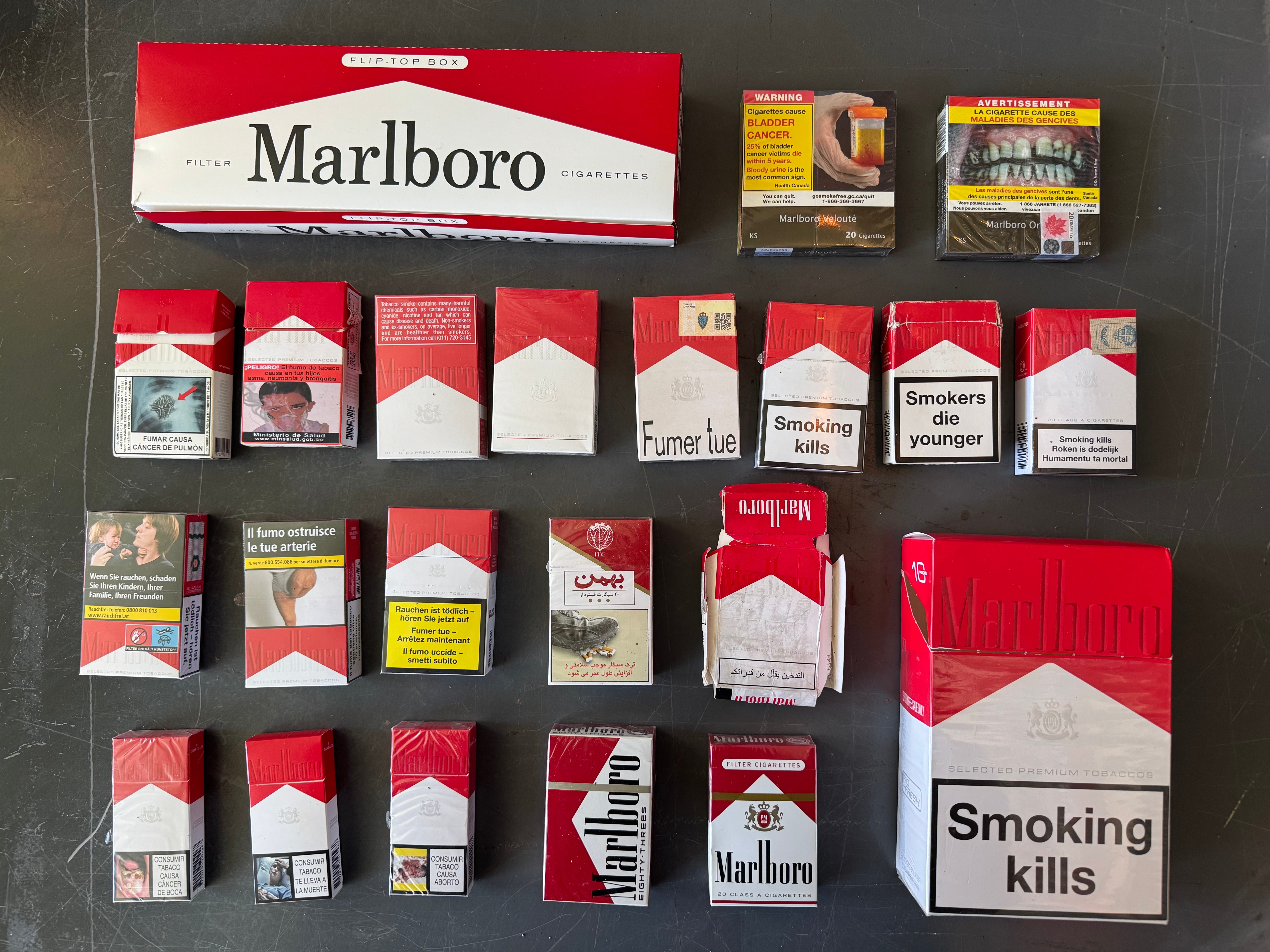
I walked by the pack on the street one day, and I paused to look at it, crushed, amongst scattered trash. A cat or rat had gotten into the garbage day collection bags and strewn items across the sidewalk. The pack caught my eye–so classically, expectantly red on a dreary Montréal day. I had a small collection of Marlboro boxes from all over the world, from 13 different countries and in eight different languages, some still with the cellophane on them, some half empty. Some with big warning labels crying, “Fumer Tue,” smoking kills, simple and effective. “Smokers Die Younger” was my favorite, printed on a Portuguese box. So metal, it was almost encouraging. Daring you to tempt fate, the warning became marketing.
The pack on the street caught my eye because a beautiful Marlboro box is a rarity in Canada. Canadian packs are typically so horrifyingly unrecognizable, plastered with graphic and disorienting photos of disease, nothing metal about it. Each individual cigarette read, “Poison in every puff,” a constant, incessant reminder.
I thought about her discarded pack of cigarettes while I drove my truck down a New Hampshire road. My Canadian friend examined his newly bought American Spirits in the passenger seat. Sky blue and ripping the cellophane off, he remarked. “You have cute little designs on your cigarettes. It would make me want to smoke everyday.” My cigarettes. My cigarettes were American cigarettes. We Americans like to think our cigarettes come without warnings, but our warnings are written in shimmering gold. Tiny, neat letters, a little note from the Surgeon General about carbon monoxide. Not about risks to you–you have to figure that out for yourself. These packages are gorgeous. Emblematic of a freedom Americans cling to, the freedom we claim even when it takes lives.
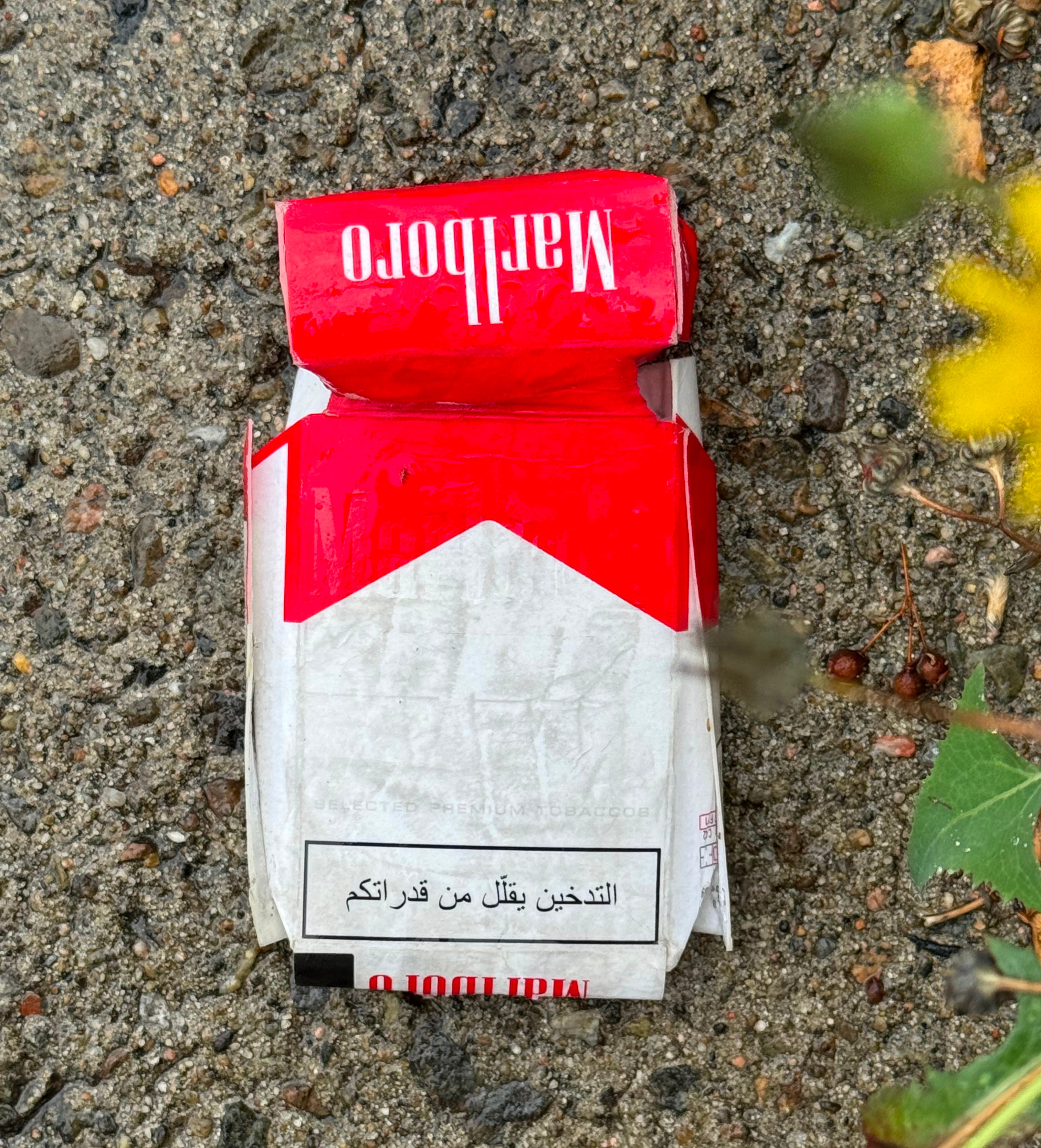
I walked by the crushed Marlboro pack on Rue Clark, and on my way back home, I picked it up. Damp, I carried it between two fingers and put it on the radiator to dry. American Marlboros have the lettering printed in black, almost Times New Roman, but stretched vertically to accommodate the dimensions of the box. Packs elsewhere rely on the exquisite, clean angle of the roof-like white triangle against firetruck red. It’s Marlboro, it’s classic, recognizable anywhere, so you don’t need to spell it out. It’s a brand with a monopoly on a color and a shape. This pack wasn’t lined in shiny foil, just white paper. Its warnings were outlined in long rectangles at the bottom, both in French and Arabic. “Smoking decreases your capacity” it read in French. Capacity for what? While daunting, it seemed vague. I texted a photo of the Arabic side to a friend who sent back, “Smoking lowers your ability.” The side of the box had a better clue of where it was intended to be sold, Algeria.
A month later I was walking down Rue Clark again. Trash day, a bag ripped open, and another pack of Algerian Marlboro Reds lay just 20 feet from where I had found the first one. I stopped again to look at it, admire the packaging, and then looked up to scan the apartments on the street, as if it would be obvious who the smoker was. I anticipated looking up to see a woman holding a bright red and white pack of cigarettes, cupping her hands around a plastic dépanneur lighter and inhaling.
Even if the smoker had been apparent in this moment, I was unlikely to inquire. Glancing at the pack of cigarettes on my mini fridge, I thought of her daily. Unknowingly, she left a small trail that caused me to wonder who she was, wonder how many packs of cigarettes she carried with her to Canada. Maybe a friend had brought them to her, just these two packs stashed in a carry on. I wondered if she preferred an Algerian Marlboro over the harsh Canadian ones. She had to, who doesn’t? I wondered if the cigarettes were purchased from a small vendor or perhaps part of a big Duty Free carton bought in the airport. I loved to watch folks carry cartons of cigarettes on a plane. They sell cigarettes everywhere, I remembered thinking as a kid, why transport them so far? I didn’t think they could taste or feel different, that there could be a kind of familiarity of the cigarette box from your home, and that when you go months without a simple and familiar thing, you feel a quiet distance, a small hole that you don’t know needs filling.